
By Eric Cheyfitz
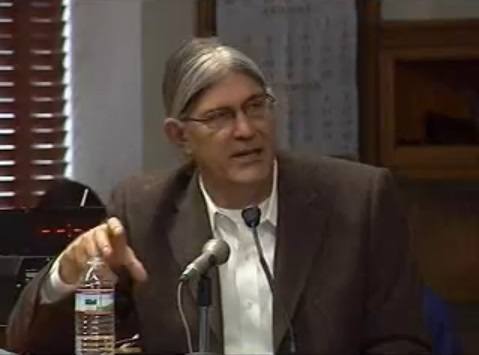
I write in remembrance of Ward Churchill, who died on August 11, 2026. I was a member of Ward’s defense team, headed by the civil rights attorney David Lane, both at hearings at the University of Colorado at Boulder in 2007 and in state court in Denver in 2009, when he sued the university for his firing for charges of “research misconduct” and “plagiarism,” both of which I analyzed thoroughly in a 2008-09 edition of the journal “Works & Days.” The title of my essay is “Framing Ward Churchill: The Political Construction of Research Misconduct.” The title points to the political motivations of the charges against Ward. Those charges were manufactured to mask the attack on Ward from the Right (Fox News, the Colorado governor and legislature, and the UCB administration with the complicity of certain faculty committees) for his activism and speech on behalf of social justice, particularly focused on an essay he published a day after 9/11, titled “Some People Push Back: On the Justice of Roosting Chickens,” on which I will focus in Part II of this essay. Indeed, the Denver jury, to which I gave expert testimony as a scholar of American Indian Studies and federal Indian law, found that Ward’s “protected speech [was]a substantial or motivating factor in the decision to discharge [him]” and that the University had not “shown by a preponderance of the evidence that [Churchill] would have been dismissed for other reasons.” Nevertheless, on July 7, 2009, District Court Judge Larry Naves “denied Churchill’s motion for employment reinstatement as a tenured professor and concluded that back pay ‘is not an appropriate remedy in this case’” (CU Connections). The Colorado Court of Appeals and Supreme Court upheld the Naves verdict, which served the university’s agenda against Ward.